
 Sales and customers
Reward loyalty. grow retention.
Build stronger customer relationships with Wizard’s built-in loyalty engine. Create membership tiers, reward repeat buyers, and let customers redeem points instantly at checkout.
Updated August 2026
- Bronze5,240
- Silver2,180
- Gold812
- Platinum180
Turn purchases into repeat business

Membership management
Enroll clients into loyalty programs with automatic tiering, points, and tracking.

Instant redemption at POS
Let customers check their balance and redeem points directly during checkout.
- Applied
Branch · Achrafieh
1,200 pts · $24 off
- Applied
Online
800 pts · free delivery
- Applied
Branch · Zalka
2,400 pts · $48 off
Flexible, automated loyalty built into your ERP
Easily set up point rules, bonus rewards, and special promotions, without needing a separate system. It’s loyalty, fully integrated into your sales and CRM workflows.
Loyalty tools that keep customers coming back
From point management to client self-service, Wizard helps you create a connected rewards experience.

Membership enrollment
Assign loyalty status to clients manually or automatically based on purchases.

Promotional campaigns
Double or boost points for holidays, specific items, or limited-time events.

Customer portal access
Let clients check point balances and transaction history via mobile or browser.

Point rules & rewards
Create flexible rules to earn and redeem points by amount, product, or frequency.

POS Integration
View and redeem client points directly on the point-of-sale interface.

Real-time point sync
Ensure all redemptions and point changes are synced instantly across branches.
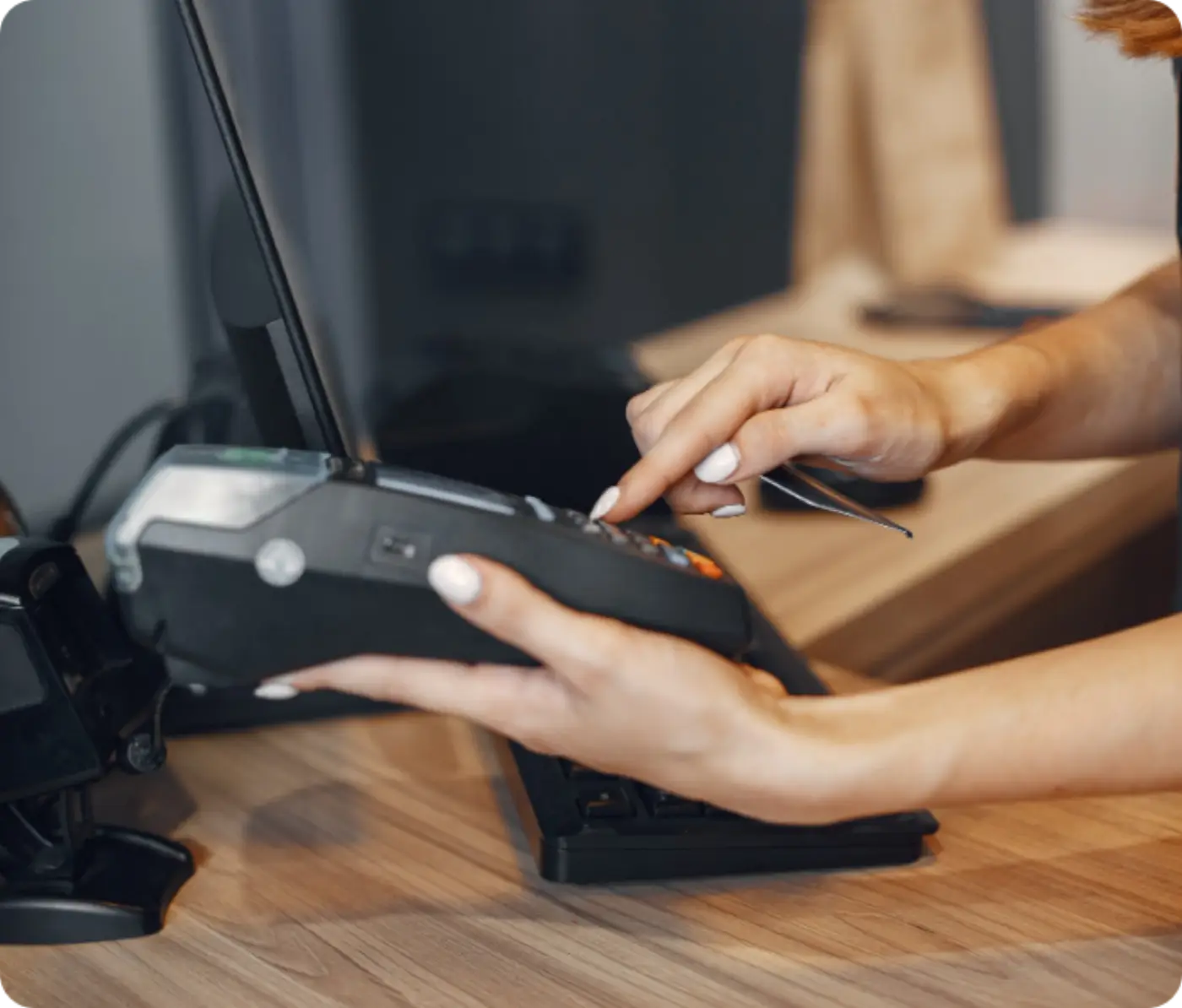
Earned in branch, spent online, same balance.
Who runs Loyalty Program
The sectors where this one does the most work. Each has its own page.




Why do most loyalty programs get forgotten?
Because they sit outside the sale. A separate card, a separate app or a separate database means the cashier has to remember to ask and the customer has to remember to carry something. A balance nobody can check quickly stops feeling like money, and then it stops working.
Retailers run this experiment often. The program launches, staff are briefed, enrolment looks good for a month, and then a busy Saturday arrives and nobody asks anybody about points again.
Loyalty built into the sales system takes the remembering out of it. The customer is looked up on the same screen the cashier is already using, the balance is visible there, and redeeming happens as part of taking payment rather than as a separate procedure with its own login.
How do you decide what a point is worth?
By working backwards from margin. A point is a discount you are agreeing to give later, so the rate should come from what you can afford on the products people actually buy. Rules can be set by amount spent, by product or by frequency, so you can be generous where there is room.
The mistake worth avoiding is copying the rate a large chain uses. Their margin, their buying power and how often their customers visit are not yours. A rate that turns out to be too generous is painful to reduce, because the people who notice are exactly the customers you were trying to hold on to.
| Rule type | How it is used | What it tends to encourage |
|---|---|---|
| Points per amount spent | A flat earn rate across the whole basket | Bigger baskets, and it is simple to explain at the till |
| Points by product or category | A higher rate on items with room in the margin | Shifting the mix towards what you want to sell |
| Points by frequency | Rewarding a number of purchases in a period | Coming back more often rather than buying more at once |
| Tiered earning | A better rate once a customer passes a threshold | Keeping the customers you can least afford to lose |
| Campaign multipliers | Double points on a holiday or in a slow week | Moving demand into a period you choose |
What does a tier actually change?
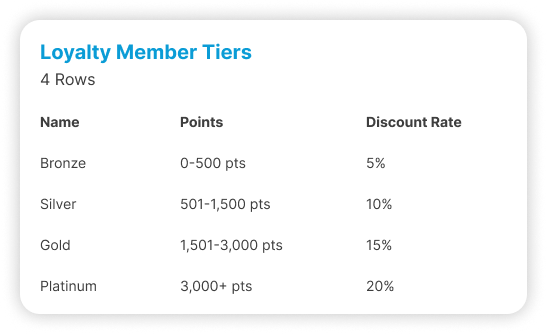
Usually the earn rate and the recognition. Customers can be enrolled manually or moved between tiers automatically based on what they buy, so a tier reflects real behaviour rather than a decision somebody made once and never revisited. What each tier gives is yours to define.
Automatic tiering is the practical part. Programs with manual tiers decay quietly, because promoting and demoting customers is nobody's actual job and the list ages until it describes last year.
Whether tiers help at all depends on the business. Where customers buy often and compare openly, a visible tier gives them a reason to put all their spending in one place. Where purchases are rare and large, tiers do very little and a straightforward earn rate works better.
What keeps balances the same across branches?
One record per customer instead of one per location. Points earned in a branch on Monday are available in a different branch on Tuesday, because both are reading the same balance rather than holding a local copy that gets merged overnight.
Multi branch loyalty is where home built programs fall over. Each till keeps its own list, a merge job runs at night, and the customer discovers the gap at the worst possible moment, standing at a counter with a queue behind them.
A shared balance protects you in the other direction as well. The same points cannot be spent twice in two locations, which is the failure nobody mentions when describing a system that syncs after the fact.
What can customers see for themselves?
Their balance and the history behind it, through a portal they can open on a phone or a browser. That removes the most common question at the counter and the most common source of doubt, which is a customer who is sure they earned points on a purchase that is not showing.
Self service matters more than it sounds for a program's credibility. A balance a customer can check is a balance they believe, and a customer who believes the balance is one who eventually uses it.
There is a staff cost to it too. Every points question answered at a counter is a minute of a queue on the busiest day of the week, and it is a minute spent on something the customer could have looked up in the car park.
How do you know whether it is working?
Compare behaviour, not enrolment. Because loyalty runs on the same data as sales, you can look at how often members buy and what they spend against customers who never joined. Enrolment numbers on their own only tell you that staff remembered to ask.
The honest caveat: a loyalty program is a retention tool and nothing more. If customers are leaving because of price, range or how they were treated, points delay the decision rather than change it, and you will have paid for the delay.
It also carries a real cost. Points are margin you have promised to give back, and it is worth modelling before launch rather than after the first heavy redemption week. Take last year's sales, apply the rate you are considering, and look at the number.
Where it does work, the effect is usually concentrated in a minority of customers who care enough to change where they shop. That group is worth the program on its own. Measure them rather than the whole base, or the average will hide what is actually happening.
Connected to the rest of the system
The Loyalty Program Module works with other key business functions to turn customers into repeat buyers.

CRM
Every lead, quote and conversation on one customer record, with their balance right there.

Sales
Quote to order to invoice without retyping anything, with discount rules that hold.

Accounting
Post entries automatically, reconcile the bank, and close the month without rebuilding it in Excel.

Mobile Sales App
Reps get live stock, pricing and customer balances on the phone, and can sell from the van.
Trusted by businesses across Lebanon and the Gulf





Businesses already running on Wizard
Wizard Cloud ERP completely streamlined our operations, online and in-store. From inventory syncing to order fulfillment, everything now runs smoother, faster, and with fewer errors.
AghasarkissianRetail, online and in-storeManaging multiple restaurants under one group was a challenge, until Wizard Cloud ERP stepped in. We now have better visibility, centralized control, and smoother day-to-day operations across every concept.
Al Mandaloun GroupHospitality, multi-outletWizard Cloud ERP brought structure and clarity to our luxury business. From sales tracking to customer experience, we now operate with precision while maintaining our premium standards.
Choucair GroupLuxury retailWizard Cloud ERP gave us full control over our multi-branch retail operations. We can manage inventory, sales, and customer data seamlessly, all from one platform.
K-LynnMulti-branch retailAs exclusive brand distributors, we needed visibility and flexibility. Wizard Cloud ERP helps us track every shipment, order, and partner account with confidence.
M. Nassif & FilsExclusive brand distributionHandling installations, service, and logistics at scale used to be complicated. With Wizard Cloud ERP, we now track every detail across departments; streamlined, connected, and always up to date.
OTISInstallation and field service
Questions we get asked
If yours is not here, ask on the demo call. We would rather tell you it is not a fit than sell you the wrong thing.
Ask us directlySee it running on your own numbers
Bring one messy process, the one that eats your week, and we will show you what it looks like inside Wizard. If it is not a fit, we will say so.
- Thirty minutes, and you can bring your finance person
- We look at the tools you run today before we show you anything
- Nothing to sign and no card needed
- 1You tell us what is breakingA short form: your sector, rough size, and the process that hurts most.
- 2We come back within one working dayWith whether we are a fit, and which modules would actually apply.
- 3A demo built around your caseNot a generic tour. Your workflow, your kind of data.